This tool calculates dose from a recognized goat dewormer chart. It does not choose the wormer for you.
Use the tool, but don’t skip the judgment.
This calculator helps with dosage math once you have chosen a product and have a goat weight. Parasite management still depends on observation, records, fecals, resistance awareness, and veterinary guidance. The calculator is one tool in the barn, not the whole toolbox.
Bookmark this calculator on your phone so it is easy to find when you need it.
Goat Dewormer Dose Calculator
Before You Deworm
A dewormer calculator can help with math, but it cannot tell you whether a goat needs treatment or which product is best for your herd.
Before deworming, consider fecal testing, FAMACHA scoring, Five Point Check, body condition, age, pregnancy status, recent stress, pasture conditions, and your herd’s parasite history.
FAMACHA is useful for identifying anemia related to barber pole worm, but it does not detect every type of internal parasite. A goat may have parasite issues without showing a poor FAMACHA score.
Bottle jaw can show up with heavy barber pole worm burden because of anemia/protein loss, but it can also be confused with other problems.
Fecal egg counts and fecal egg count reduction testing can help show what is happening in your herd and whether a dewormer is still working.
Read more:
Fecals & Why They Matter
FAMACHA: Helpful, But Limited
Bottle Jaw in Goats
Dewormer Resistance
Combination Deworming: Pros, Cons & Cautions
When to Call a Vet
It’s not a Silky but she’s a good visual with that sleek hair and them bones
How to Estimate Weight by Measurement
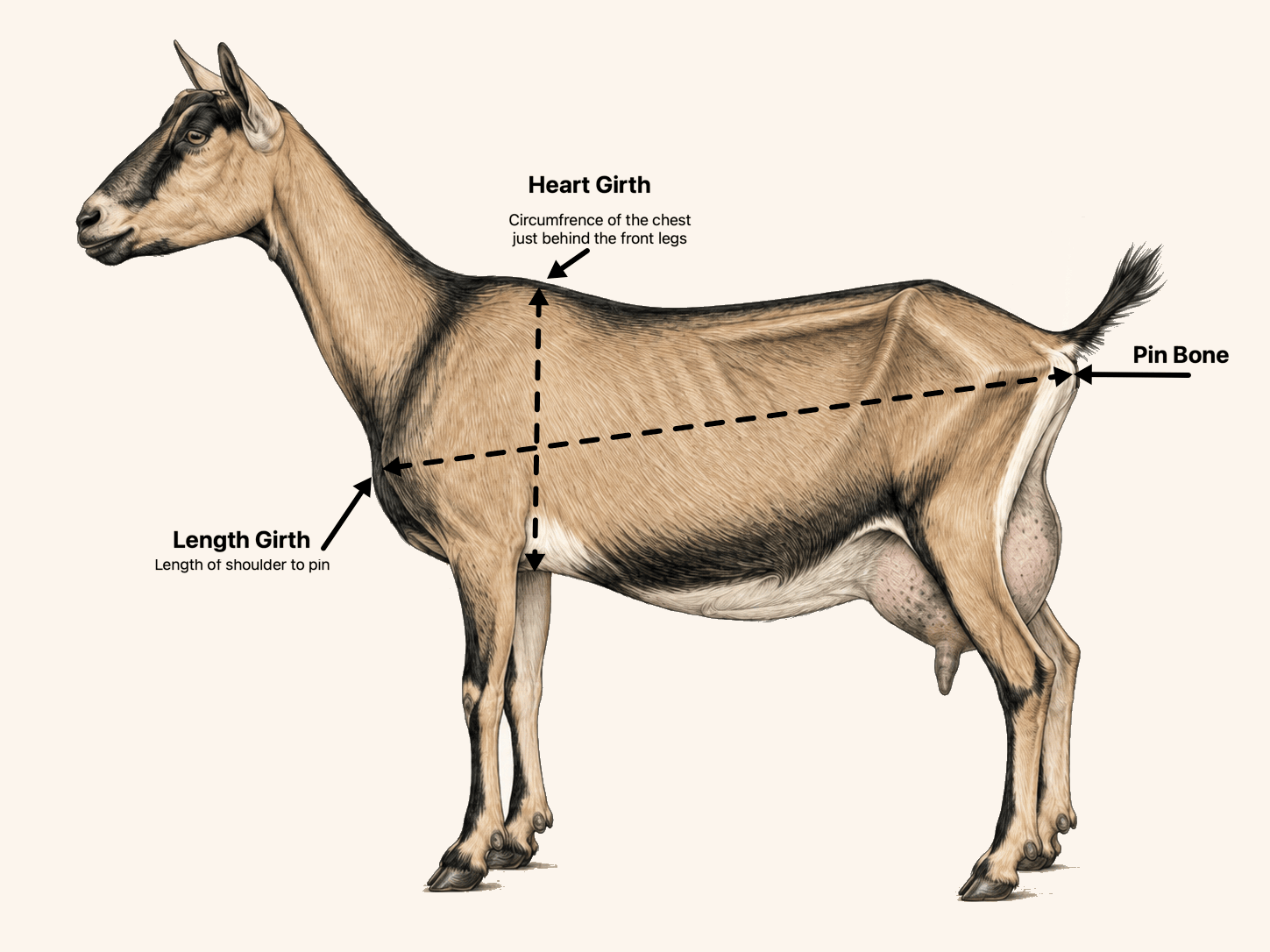
For the most accurate dosing, use an actual scale weight whenever possible. If a scale is not available, you can estimate a goat’s weight using heart girth and body length measurements.
Measure the heart girth around the goat’s chest just behind the front legs. The tape should go all the way around the body, snug but not tight.
Measure the body length from the point of shoulder to the pin bone. The goat should be standing square on level ground.
Then use this formula:
Heart Girth × Heart Girth × Body Length ÷ 300 = Estimated Weight in Pounds
This is an estimate, not an exact weight. Body type, pregnancy, rumen fill, age, coat, and body condition can affect accuracy. When dosing medications, the most accurate weight possible is always best.